Bedding · Nursery textiles
Naturepedic Nursery Layers: Muslin Swaddles or Waffle Weaves?
In a thoughtfully prepared nursery, the smallest details can shape the feel of the room. A muslin swaddle brings airy softness and easy portability; a waffle-weave blanket offers more texture and a gently cushioned hand. Both can be made from organic cotton, but they are designed for different moments—and neither should be treated as a substitute for safe-sleep guidance.
A practical, product-agnostic guide to weave, breathability, sizing, care, and everyday use.
A nursery choice shaped by use
Muslin and waffle weave are both familiar in baby bedding, yet they create noticeably different experiences. Muslin is a plain-weave cotton fabric, often made with a loose, open structure that feels light and pliable. Waffle cloth is defined by its raised, grid-like texture: small pockets and ridges lend dimension and a little more substance. One tends to feel breezy and featherweight; the other, softly tactile and more cocooning in the hand.
That distinction matters less as a question of which is “better” than as a question of where, when, and how a textile will be used. A large muslin swaddle can be useful for supervised wrapping when appropriate, as well as for carrying along in a stroller bag or using as a nursing cover. A compact waffle blanket may make a lovely layer for supervised cuddles, a play space, or an adult’s armchair. For infant sleep, however, the most important consideration is not texture or fiber preference: it is following current safe-sleep recommendations.
Parents comparing Naturepedic nursery essentials can start with the product’s stated dimensions, construction, care instructions, and intended use. The [Naturepedic Organic Muslin Swaddle Blankets](\/products\/naturepedic-organic-muslin-swaddle-blankets-4-color-pack-36) are described as two-layer, pre-washed organic cotton muslin, approximately 47 by 47 inches, in a four-blanket set. The [Naturepedic Organic Cotton Waffle Baby Blanket](\/products\/naturepedic-organic-cotton-waffle-baby-blanket-35) is approximately 30 by 40 inches and uses a textured waffle weave. These are different formats for different routines, not interchangeable answers to every nursery need.
Muslin: an open, airy classic
Muslin’s appeal begins with its lightness. The open construction allows air to move through the cloth, and the fabric usually folds down into a neat, portable square. For caregivers, that easy packability is more than a styling point: a swaddle can move from nursery to diaper bag without demanding much room. A generous square can also be easier to arrange around a baby for supervised wrapping, provided caregivers follow safe-swaddling instructions and the baby’s developmental stage.
The Naturepedic four-color swaddle set is described as having two layers of organic cotton muslin, a pre-washed finish, and approximate dimensions of 47 by 47 inches per blanket. Its product information also lists uses such as burping cloth, stroller shade, nursing cover, and cuddle blanket. These are examples of the versatility a large, lightweight square can offer during waking, supervised routines. The exact suitability of any use depends on the circumstances: for example, a cover over a stroller should not obstruct airflow or a caregiver’s view, and a cloth should never be arranged in a way that creates a hazard.
Muslin is often valued for a soft, relaxed feel that becomes more familiar with washing. The weave may show a subtle crinkle, and it can feel less structured than a denser textile. That softness is appealing in a hands-on nursery, but “breathable” should not be mistaken for “risk-free.” A lightweight blanket remains a loose item if placed in an infant’s sleep space. Airy fabric does not override safe-sleep recommendations.
Swaddling itself is also a specific caregiving practice, not simply a synonym for wrapping a baby in any blanket. If swaddling is used, caregivers should follow current guidance on positioning and technique, keep the baby’s face uncovered, avoid overheating, and stop once the baby shows signs of attempting to roll. A swaddled baby should always be placed on their back for sleep. Families should consult their pediatric clinician or public-health guidance if they are unsure whether swaddling is appropriate for their baby.
Waffle weave: texture with a little more presence
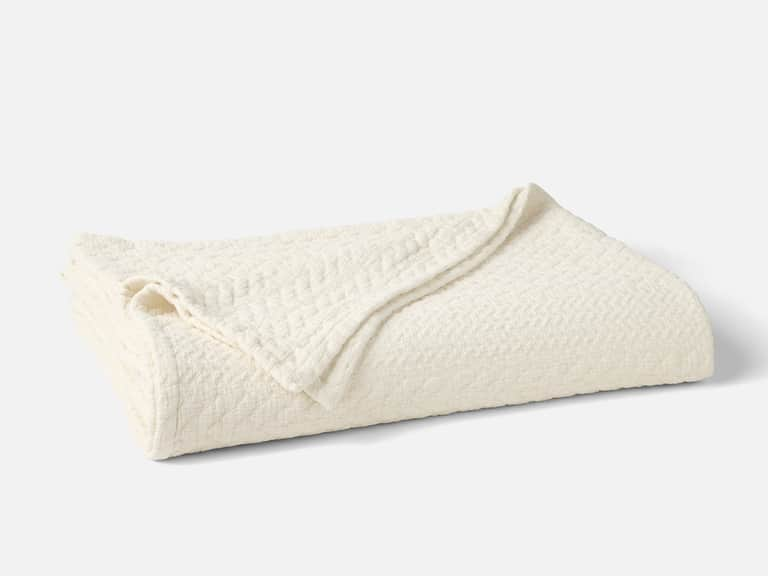
Waffle weave is recognized by its raised squares and recessed channels. This three-dimensional surface creates a textured hand and gives the cloth a more substantial look than a fine, open muslin. The pattern can encourage airflow while adding a softly cushioned feel, making waffle cotton an appealing choice for a blanket intended for supervised use or as a decorative layer. Its geometry has a quiet visual polish, too: simple, tactile, and at home in a nursery that favors natural materials over busy prints.
The Naturepedic Organic Cotton Waffle Baby Blanket is described as made from GOTS-certified organic cotton, pre-washed for softness, and sized at approximately 30 by 40 inches. Its product information highlights breathability, lightweight warmth, and a compact format that may be convenient for outings. That smaller size differentiates it from the roughly 47-inch-square muslin swaddles. The waffle blanket is easier to fold into a compact rectangle, while the larger swaddle offers more fabric for wrapping or other supervised daytime uses.
Texture alone does not determine warmth. Fiber weight, yarn, density, finishing, room temperature, clothing layers, and the baby’s individual needs all influence comfort. A waffle grid can feel plush to the touch without being a heavy winter layer, while a lightweight fabric can still contribute to warmth when folded or layered. When dressing an infant, caregivers should be attentive to the overall environment and avoid overheating. No weave has a universal temperature-regulating effect for every baby or room.
For a family choosing a blanket for supervised cuddles or a daytime play area, waffle weave may appeal because it feels more substantial and looks finished when folded over a chair or tucked into a nursery basket. For use in a crib or bassinet during sleep, it should not be added as loose bedding for an infant. That distinction is central: a textile can be a beautiful, useful nursery object without being appropriate for every sleep situation.
At a glance: the practical differences
| Consideration | Muslin swaddle | Waffle-weave baby blanket |
|---|---|---|
| Surface | Usually smooth, light, and softly crinkled | Raised grid with a more tactile, cushioned feel |
| Typical format | Large square that can be folded or wrapped | Smaller rectangular blanket for layering or supervised use |
| Example dimensions | Naturepedic set: approximately 47 × 47 inches per swaddle | Naturepedic baby blanket: approximately 30 × 40 inches |
| Everyday character | Portable and adaptable for supervised daytime routines | Textured and gently substantial, with a neat blanket format |
| Care information | Product guidance: warm machine wash; tumble dry low | Product guidance: warm machine wash; tumble dry low |
Dimensions and care details above refer to the listed Naturepedic product information. Always check the current sewn-in label and manufacturer instructions for the item you own.
Organic cotton and what a certification can tell you
Both styles can be made from organic cotton, a plant fiber chosen for its familiar softness and versatility. The word “organic,” though, is most useful when understood in context. It relates to standards for agricultural production and, depending on the certification, may also form part of a broader system governing processing and manufacturing. It does not by itself guarantee that a textile is suitable for every baby, that it has a particular clinical benefit, or that the finished item is free of every substance a caregiver might wish to avoid.
The Naturepedic waffle baby blanket is described as GOTS-certified organic cotton. GOTS—the Global Organic Textile Standard—is a textile processing standard with requirements that cover organic fibers and certain environmental and social criteria through the supply chain. A certification can give shoppers a more concrete framework than a vague environmental claim, but it is still worth reading the product details and understanding which specific item and production stages the certification applies to.
Material choices may matter to families who prefer natural fibers or are trying to make informed decisions about textile sourcing. Still, claims about allergies, chemical exposure, or improved sleep should be treated carefully. An organic fiber label does not establish that a blanket prevents allergies, treats skin conditions, or makes an infant sleep better. For concerns about sensitive skin or a medical condition, seek advice from a qualified health professional rather than relying on a fabric description.
In a considered nursery, sustainability is also a matter of use over time. A textile that is washed according to its care label, stored well, and passed along when it is no longer needed may see a longer useful life. Buying only what serves a real routine can be just as meaningful as focusing on fiber claims. A four-piece swaddle set may suit a household that does laundry frequently or likes to keep spares on hand; another family may find a single blanket more practical.
Size, portability, and the rhythm of a day
Dimensions are easy to overlook in product descriptions, but they often reveal the intended character of a piece. A square measuring about 47 inches across offers ample fabric for folding and has a broad range of supervised daytime applications. It may also be more fabric than a caregiver wants to carry if the goal is simply a compact layer for a brief outing. By comparison, a 30-by-40-inch baby blanket is a more familiar, smaller format—easy to fold and place beside other nursery essentials, though less suited to wrapping as a large square.
Think through a typical day before choosing. Will the cloth live in a nursery basket, travel in a stroller bag, or be used mostly at home? Is it meant to be a dedicated swaddle, a burp cloth, a supervised cuddle layer, or a small decorative accent? When one item is expected to perform several jobs, the larger muslin format may be more adaptable. When tactile texture and a neatly sized blanket are the priority, waffle weave may be the more natural fit.
Consider the number of pieces as well as their shape. A multi-pack can make sense for a household that wants a rotation of clean swaddles, especially when laundry is frequent. A single waffle blanket may suit a more edited collection of nursery layers. These are practical judgments, not measures of parenting style; the right choice is simply the one that fits the household’s routine and remains safe for the intended use.
Care that respects the weave
Frequent washing is part of life with baby textiles, so care instructions belong in the comparison. The listed Naturepedic swaddles and waffle baby blanket can be machine washed warm and tumble dried on low, with instructions not to iron or bleach. The label on the item should always take precedence, since finishes, batches, and care recommendations can change.
For either weave, a gentle routine can help maintain softness and shape: wash with similar colors, use an appropriate amount of detergent, avoid bleach unless the care label specifically allows it, and do not overload the washer. Tumble drying on low follows the stated guidance for these examples. Remove items promptly after drying, then fold them fully dry and store them in a clean, ventilated place.
Muslin’s loose, light character can make it especially important to check the fabric and seams over time for pulls or damage. Waffle cloth’s raised pattern may feel different after laundering, but its texture is part of its construction rather than a guarantee of added durability. If a blanket becomes worn, develops loose threads, or has damaged edging, discontinue use in situations where the damage could pose a risk. Regular inspection is a simple part of keeping nursery textiles in good condition.
A note on infant sleep safety
Nursery styling should never blur the line between a comforting textile and a safe sleep space. Current safe-sleep guidance generally recommends placing infants on their backs on a firm, flat sleep surface with only a fitted sheet, keeping loose blankets and other soft items out of the sleep area. A muslin swaddle or waffle blanket should not be left loose in a crib or bassinet with a sleeping infant.
If a caregiver chooses to swaddle, it should be done according to recognized safe-swaddling guidance. The wrap should be secure without restricting hip movement, the baby’s face and head should remain uncovered, and the infant should be placed on their back. Swaddling should stop as soon as a baby shows signs of trying to roll. A swaddle is not a way to restrain movement, and weighted swaddles or blankets should not be used unless specifically advised by an appropriate medical professional. Because recommendations can be updated and individual circumstances vary, consult a pediatric clinician and trusted public-health resources for guidance tailored to your baby.
For everyday use outside sleep, keep blankets under close adult supervision and away from the baby’s face. When used as a stroller shade, ensure the setup does not restrict ventilation or visibility. The safest and most elegant nursery is one in which practical care leads and aesthetics follow.
Which one belongs in your nursery?
Choose muslin if you value an airy, flexible square that can be folded, packed, and used across a range of supervised daytime routines. Its generous dimensions make it a natural option for caregivers who want a swaddle format and appreciate having several pieces in rotation. The Naturepedic four-pack is one example, with two layers of organic cotton muslin and approximately 47-inch-square dimensions.
Choose waffle weave if the appeal is a more textured hand, a little more visual structure, and a smaller blanket format for supervised cuddling or nursery layering. The Naturepedic Organic Cotton Waffle Baby Blanket is described as a 30-by-40-inch GOTS-certified organic cotton layer with an airy waffle construction. It offers a tactile counterpoint to the smooth, crinkled character of muslin.
Some families may find room for both, because they answer different needs rather than competing for the same one. A muslin square can be the practical, grab-and-go essential; a waffle blanket can be the textured favorite for a supervised moment in a caregiver’s arms. If you prefer to keep the nursery spare, make the decision by considering how often you will use each item, how it will be washed, and whether its size fits the routine you actually have.
The takeaway: compare purpose before texture
Muslin and waffle weave bring two distinct sensibilities to baby bedding. Muslin is light, adaptable, and generous in size; waffle cotton is dimensional, tactile, and more blanket-like. Organic cotton and a recognized certification may be important considerations for a family, but they do not replace attention to construction, care, intended use, or safe-sleep practices.
For Naturepedic’s nursery options, the choice is clearest when reduced to daily function: a larger muslin swaddle set for flexible, supervised use, or a smaller waffle-weave blanket for a softly textured layer. Either may have a place in a considered nursery, provided it is used for the right purpose. The most thoughtful choice is not the one with the most persuasive promise; it is the one that feels right in the hand, works in real life, and respects the safety guidance that matters most.
Quick questions
Is muslin cooler than waffle weave?
Muslin is typically lighter and more open, while waffle fabric has a raised, textured structure. Actual warmth depends on the complete textile and the room, so neither weave should be treated as a precise temperature-control solution.
Can a muslin swaddle be used as a crib blanket?
No loose blanket, including a lightweight muslin swaddle, should be left in an infant’s sleep space. Follow current safe-sleep guidance and ask a pediatric clinician if you need help deciding how to dress or swaddle your baby.
What is the main size difference between the Naturepedic examples?
The listed muslin swaddles are approximately 47 by 47 inches each; the listed waffle baby blanket is approximately 30 by 40 inches. Confirm the current product label or listing before purchase, as specifications may change.
Does organic cotton mean hypoallergenic?
Not necessarily. “Organic” describes standards related to fiber production and, depending on certification, processing. It does not guarantee that a product will prevent an allergic response or suit every baby’s skin.